| Commissioned by DVD Beaver, and published by that site in February 2010. I’ve updated or added a few links, delighted to report that all the unavailable items can now be accessed in some form or another.I was inspired to repost this after just reseeing Sternberg’s sublime Dishonored in Criterion’s handsome new Dietrich and Von Sternberg in Hollywood box set. I’ve also just reseen the lovely if politically incoherent Shanghai Express in the same package, and I wonder if it’s possible that the relative neglect accorded to Dishonored, by cinephiles and academics alike, may have something to do with the fact that it’s the Hollywood feature of Dietrich and Von Sternberg that has the most to say about the real world — not only because it begins and ends in Vienna, but also because, as an antiwar statement that a prostitute can do more for her countryman than a female spy can do for her country, it has the most effective strategies for combining genre elements with personal fantasies and moral convictions, in part through its diverse metaphors regarding art (Dietrich’s piano playing as it serves both passion and state) and glamor (a sword blade used as a makeup mirror in the final scene). |
F FOR FAKE
A catalog entry for Il Cinema Ritrovato in 2021, put together from three other texts of mine. — J.R.
F FOR FAKE
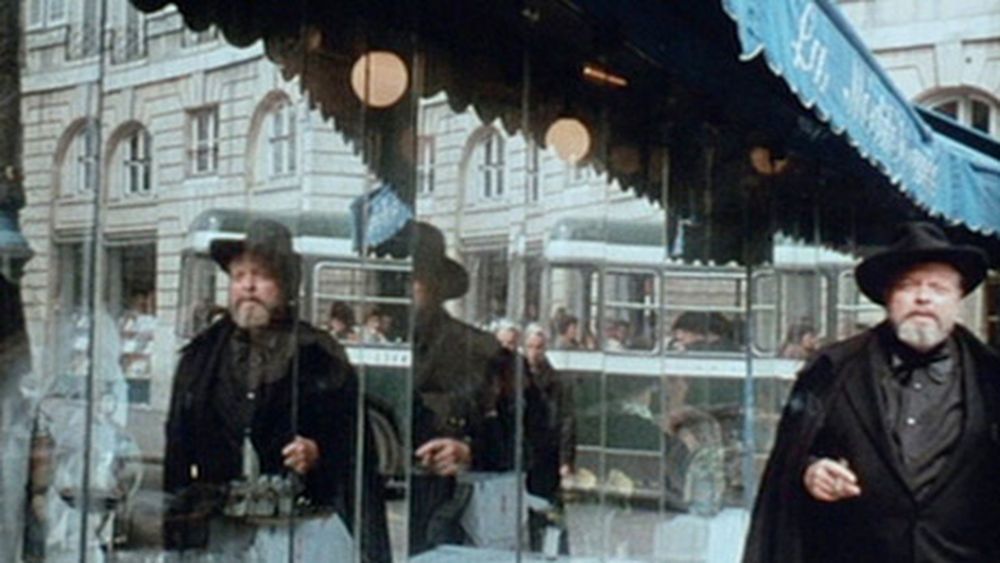
The first of Orson Welles’s two essay films to be completed and released during his lifetime (the lesser-known 1979 Filming ‘Othello’ was the second), this breezy, low-budget montage – put together from discarded documentary footage by Francois Reichenbach as well as new material filmed by Welles – forms a kind of dialectic with Welles’s never-completed It’s All True; as Welles himself implied, an equally accurate title for this playful cat-and-mouse game might have been It’s All Lies.
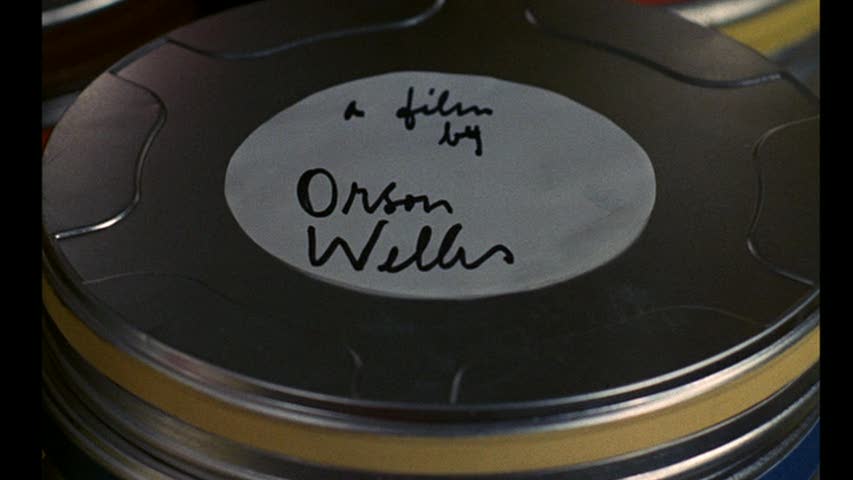
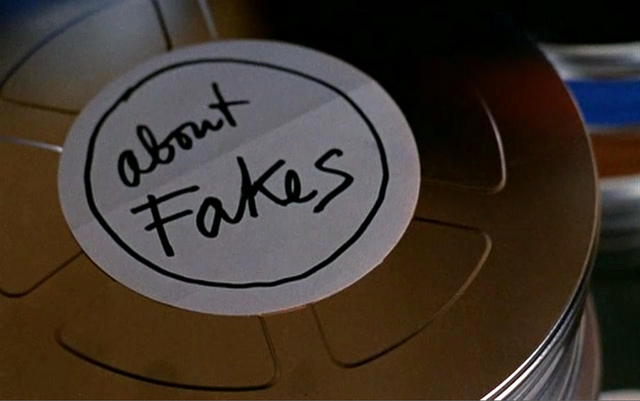
The main subjects here are art forger Elmyr de Hory, Clifford Irving, Howard Hughes, Pablo Picasso, and Welles himself; and the name of the game is the practice and meaning of deception. Some commentators have speculated that this film was Welles’s indirect reply to Pauline Kael’s subsequently disproven contention that he didn’t write a word of the Citizen Kane script; his sly commentary here – seconded by some of the trickiest editing anywhere – implies that authorship is a pretty dubious notion anyway, a function of the even more dubious art market. For a filmmaker who studiously avoided repeating himself and sought always to remain a few steps ahead of his audience’s expectations, thereby rejecting any obvious ways of commodifying his status as an auteur, Welles arguably found a way in F for Fake to contextualize large portions of his career while undermining many cherished beliefs about authorship and the means by which “experts,” “God’s own gift to the fakers,” validate such notions. Read more
Old Remake for a New City?
From The Soho News (June 11, 1980). Note: The “Hollywood assistant” quoted below was Meredith Brody, working at the time for A-Team. — J.R.
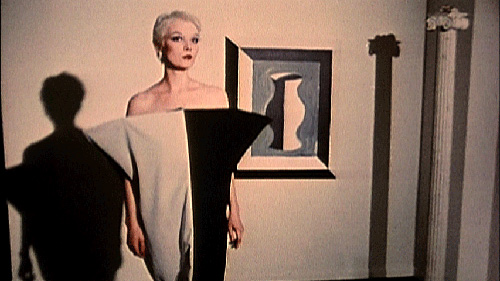
Underground U.S.A.
A film by Eric Mitchell
St. Mark’s Cinema, midnight
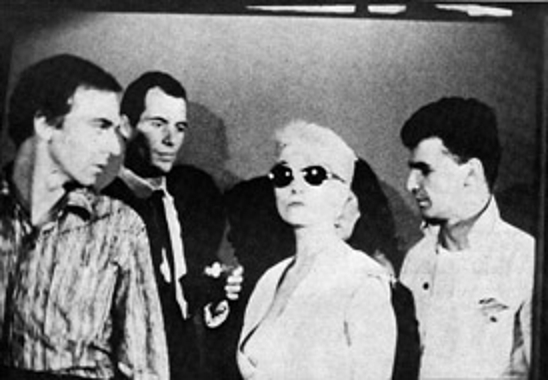
“Sometimes I think most of the ’70s is being spent in
cars, discussing remakes,” a Hollywood assistant once
woefully remarked to me. She didn’t know how lucky she
was. Sometimes, in my less happy moods, I think that
most of the 80s will be spent in theaters, watching the
same remakes that were being discussed in the ’70s.
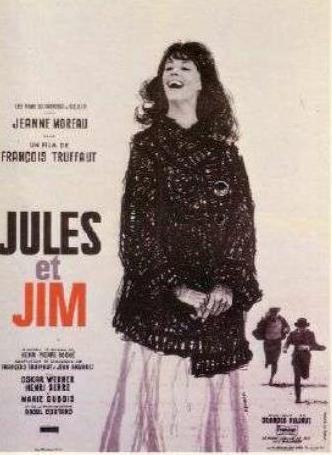
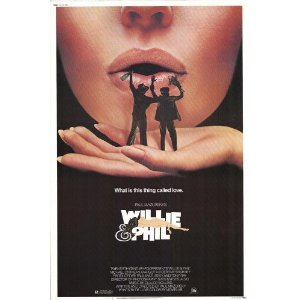
Willie & Phil –– Paul Mazursky’s remake of Jules and
Jim, set in the American ’70s — isn’t opening for a couple
of months yet. John Carpenter’s The Fog and several
other recent quickies have already remade Carpenter’s
Halloween, which was itself a partial remake of The Thing
(which Carpenter is now planning to remake more directly).
And to round off this minisurvey of new, original
thinking (if you want to exalt the conventional, call it
classical), the new Eric Mitchell film, the l6mm
Underground U.S.A., which already sounds like a remake
of Sam Fuller’s Underworld U.S.A. — is actually
described in its own pressbook as a remake of a remake:
“Taking the classic theme of Sunset Boulevard seen
through Heat,” Underground U.S.A Read more
Ten Underappreciated John Ford Films
From DVD Beaver (posted December 2007). — J.R.
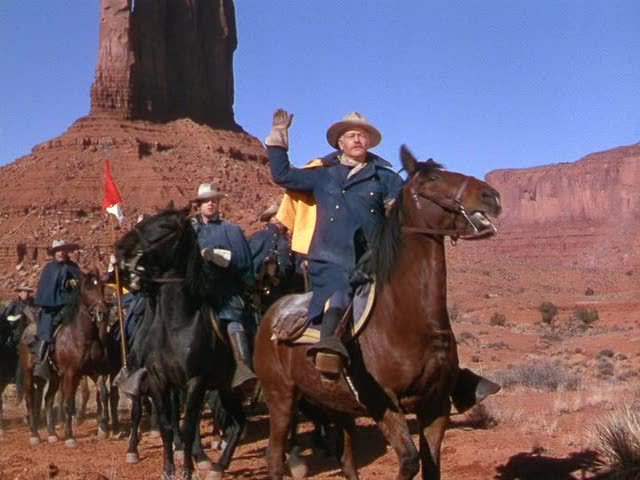
The first John Ford film I can remember seeing, probably encountered around the time I was in first grade, was archetypal: She Wore a Yellow Ribbon (1949). Apart from its uncommonly vibrant colors, this had just about everything a Ford movie was supposed to have: cavalry changes, drunken brawls, Monument Valley, and such standbys as John Wayne, Ben Johnson, Harry Carey Jr., Victor McLaglen, and Ford’s older brother Francis; only Maureen O’Hara and Ward Bond were missing.
Ford was one of the very first auteurs I was aware of, along with Cecil B. De Mille, Walt Disney, and Alfred Hitchcock, and what made him especially distinctive was that he was apparently less restricted than the others to a single genre. De Mille made spectaculars, Disney did cartoons, and Hitchcock specialized in thrillers, but a Ford movie could be a western, a war movie, or something else.
The ten relatively neglected Ford movies I’ve singled out here include a few that still can’t be found on DVD. I might well have selected some others if I’d seen them more recently (I’m currently looking forward to re-seeing the 1945 They Were Expendable, for instance), but I’d none the less argue that all of these are well worth hunting down. Read more
Weird and Wild [on Kira Muratova]
From the May 6, 2005 Chicago Reader. –J.R.
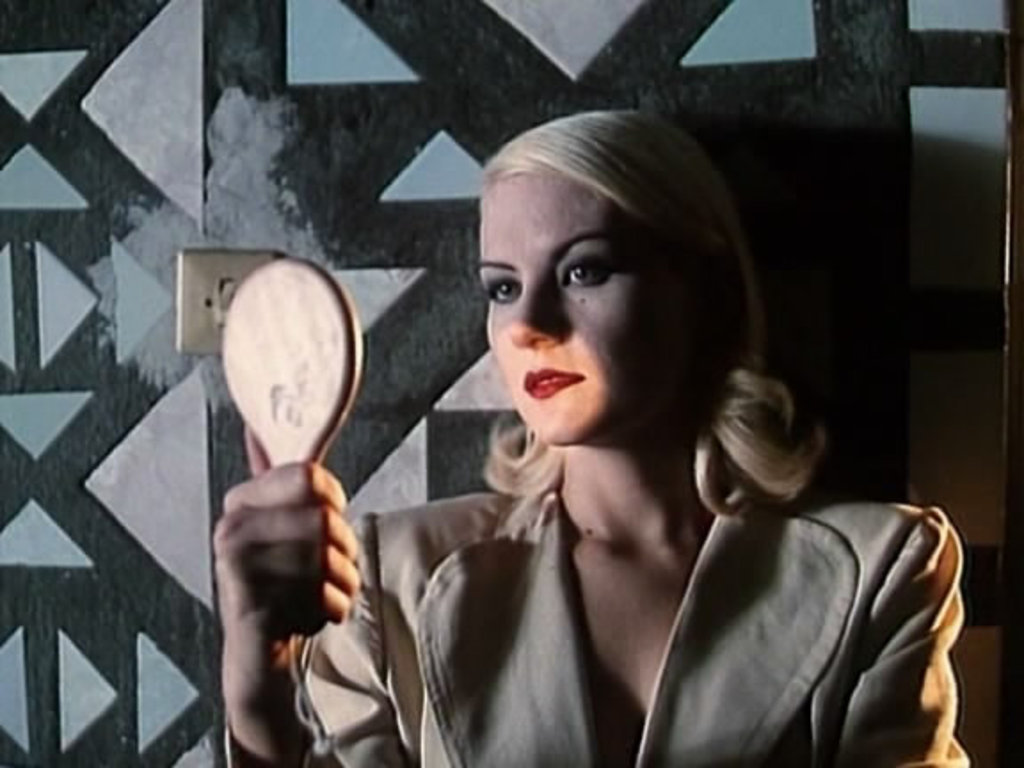
Take No Prisoners: The Bold Vision of Kira Muratova
at the Gene Siskel Film Center
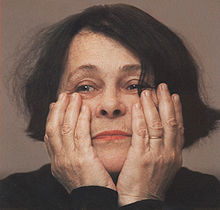
The most original filmmakers working today tend to be identified more with their respective national cultures than with the world at large. The work of directors such as James Benning, Luc and Jean-Pierre Dardenne, Hou Hsiao-hsien, Jia Zhang-ke, Abbas Kiarostami, Kira Muratova, Jafar Panahi, Béla Tarr, Tsai Ming-liang, and Edward Yang is seen as specialized, local, and esoteric. But I’d argue that what they have to say about their countries is secondary to their larger concern: the bewildering, tragicomic, and often disastrous effects of modernity on traditional modes of life and thought.
The dozen obstinately weird and wild films of Kira Muratova, seven of which are playing this month at the Gene Siskel Film Center, are described by some critics as Russian to the core, and I wouldn’t hesitate to call her the greatest living Russian filmmaker. (I’d link Alexander Sokurov’s work to the 19th century rather than to the 20th or the 21st.) Yet I’m not entirely sure what “Russian” means these days or how it applies to her.
Born in 1934 in Romania to a Romanian mother and a Russian father, Muratova went to both Romanian and Russian schools, often hiding her Russian identity at the former and her Romanian identity at the latter. Read more
Helen Keller and Untold Histories (Hers and Ours): A Conversation with John Gianvito
From Cineaste, Winter 2020. — J.R.

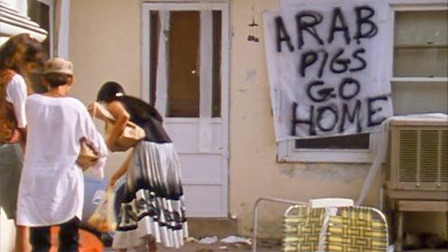
It’s been almost two decades since I first discovered the fiercely independent, passionately committed, and poetically inflected cinema of John Gianvito via his 168-minute The Mad Songs of Fernanda Hussein (2001). Later that year, I headed a jury at the Buenos Aires Festival of Independent Film that gave it our jury prize, but it’s mainly had an uphill struggle ever since being seen and recognized, most likely due to both its subject matter and its running time. John points out that I may have previously seen his 1983 feature The Flower of Pain, but if I did, I no longer remember it; ditto his portion of a 1986 episodic feature that he originated, Address Unknown.
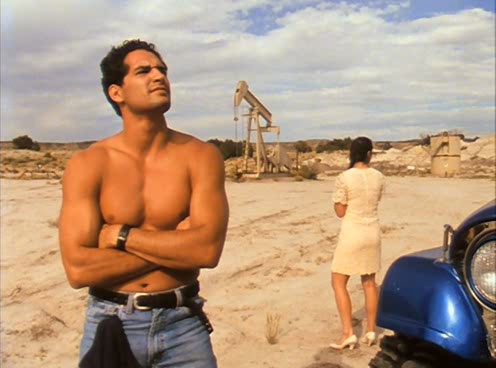
The Mad Songs remains my favorite film of his, yet even though it was available for a spell on DVD, it currently lacks a distributor. A powerful act of witness about some of the tragic stateside consequences of the first Gulf War, it was made over a seven-year period, including two years of shooting in New Mexico — despite the fact that Gianvito is a Bostonian, where he currently teaches film at Emerson College and was formerly a curator for five years at the Harvard Film Archive.
6ixtynin9
From the April 28, 2006 Chicago Reader.
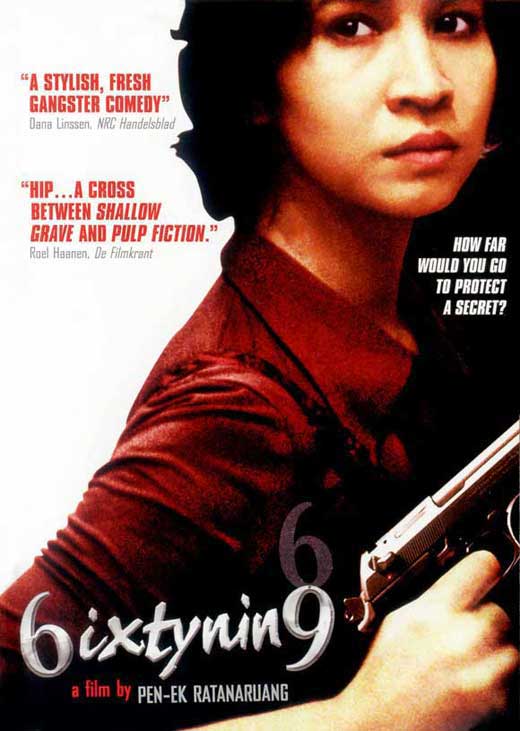
I was the head of the critics’ jury at the Hong Kong film festival last spring that awarded half its first prize to this macabre comedy-thriller from Thailand (1999, 114 min.) It’s as commercial as anything from Hollywood — as was writer-director Pen-ek Ratanaruang’s previous feature, which I liked even more, a crazed Tarantino spinoff called Fun Bar Karaoke (1997). Ratanaruang spent eight years in New York studying at the Pratt Institute and working as a freelance illustrator and designer, so his mastery of American-style entertainment obviously owes something to a prolonged absorption in this culture –though I find the Thai and global traits on view here no less striking. This picture might be described broadly as a clever version of Hitchcock lite, but that doesn’t mean that it doesn’t also have pertinent things to say about the present Asian economic crisis. (JR)
The Director’s Cut
From the Chicago Reader (March 9, 2006). — J.R.
Moments Choisis des Histoire(s) du Cinéma
**** (Masterpiece)
Directed and written by Jean-Luc Godard
Ironically, the two greatest works by the two most innovative filmmakers of the French New Wave, Jean-Luc Godard and Jacques Rivette, were originally designed as TV series. Rivette’s 760-minute, 16-millimeter serial Out 1 (1971) was rejected by French state TV, and he spent most of a year editing it down to a 255-minute version to show in theaters, Out 1: Spectre (1972). Less a digest than a perverse variant — some shots were rearranged so that they had radically different meanings and contexts, and much of the comedy was turned into psychodrama — it’s the only version that’s ever shown in the U.S., though it hasn’t been screened for years. The original — almost certainly the best film ever made by anyone about the 60s counterculture and its demise — still shows periodically in Europe.
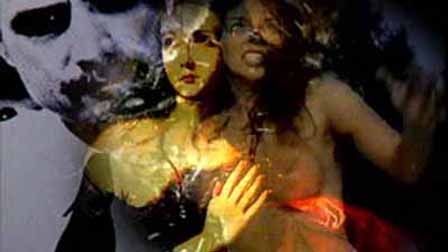
Godard’s eight-part, 264-minute video Histoire(s) du Cinéma (1998), conceived and made over 20 years, has fared better, but it’s still pretty hard to come by. The only version ever sold in France is a lousy mono video transfer; a package of CDs and books in several languages transcribing major portions of the stereo sound track came out here years ago. Read more
Symbol Life [SWAN LAKE — THE ZONE]
From the Chicago Reader (June 14, 1991). — J.R.
SWAN LAKE — THE ZONE
*** (A must-see)
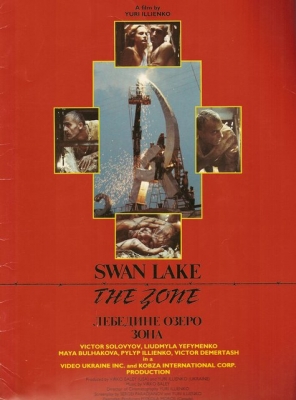
Directed by Yuri Illienko
Written by Sergei Paradjanov and Illienko
With Victor Solovyov, Liudmyla Yefymenko, Maya Bulhakova, Pylyp Illienko, and Victor Demertash.
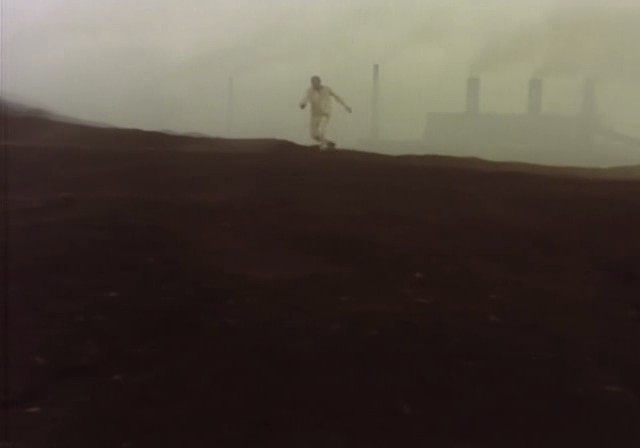
One of the most fascinating things about Russian cinema is that we still know next to nothing about it. There are the socialist realist holdovers (Little Vera, for example, and Freeze — Die — Come to Life) and wannabe American releases (Taxi Blues), but the rest of the recent Soviet pictures that have made it to Chicago are interesting mostly because of what remains obscure and intractable about them — their refreshingly and, at times, bewilderingly different views of life and art.
The films that constitute the most obvious reference points in Soviet film history — a few key classics by Eisenstein, Pudovkin, Dovzhenko, Kuleshov, Vertov, and closer to the present, the films of Paradjanov and Tarkovsky — have practically nothing to do with what ordinary Soviet moviegoers see most of the time. Even worse, we can’t take it for granted that these avant-garde works necessarily represent the best that innovative Soviet cinema has to offer, or that what we see of the Soviet mainstream is necessarily the best either. Read more
A Radical Idea [HALF NELSON & THIS FILM IS NOT YET RATED]
From the Chicago Reader (September 15, 2006). — J.R.

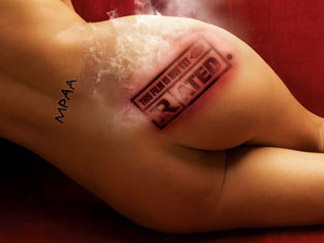
Half Nelson
**** (Masterpiece)
Directed by Ryan Fleck | Written by Anna Boden and Fleck | With Ryan Gosling, Shareeka Epps, Anthony Mackie, Monique Gabriela Curnen, Karen Chilton, and Tina Holmes
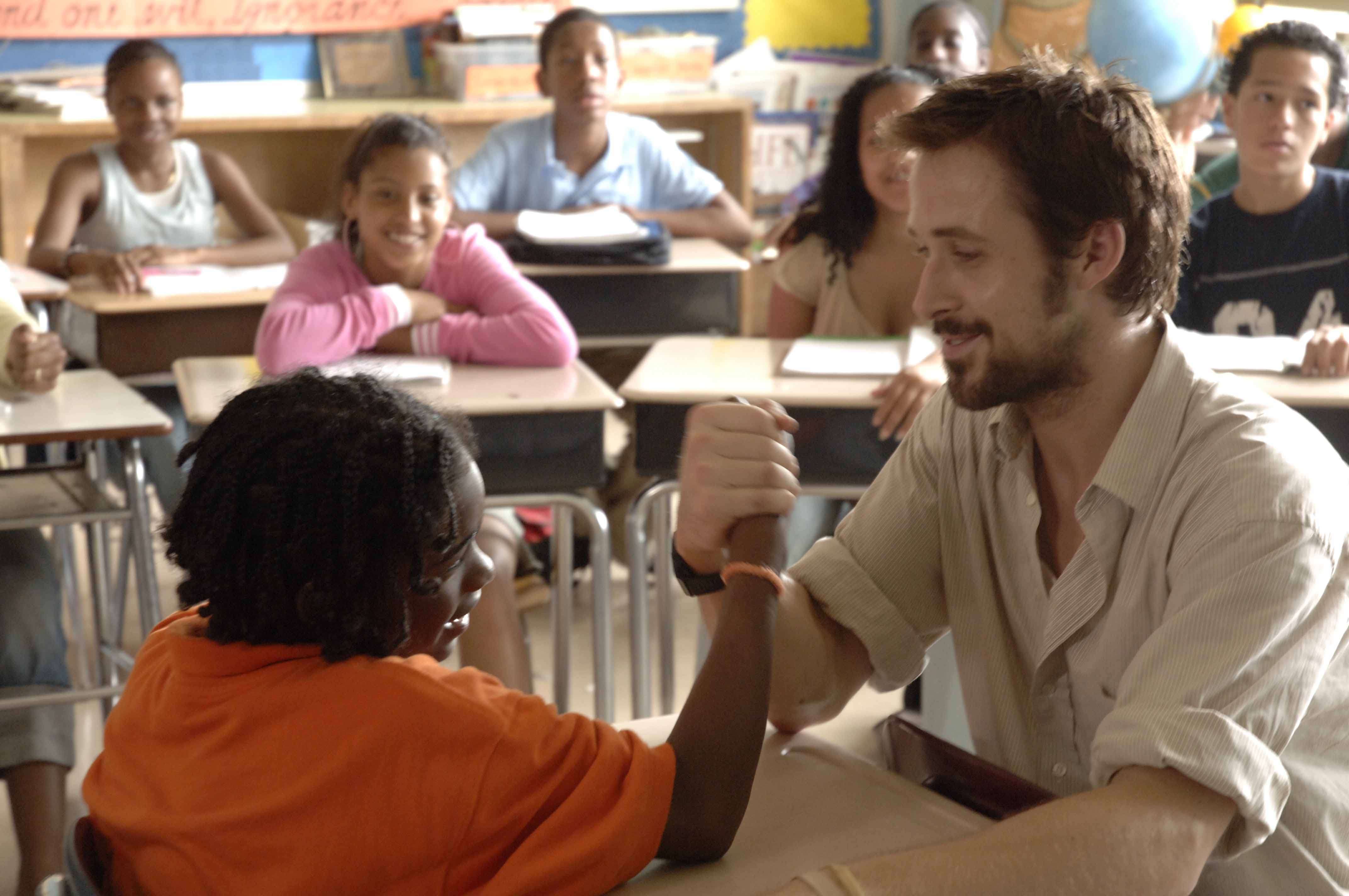
This Film Is Not Yet Rated
** (Worth seeing)
Directed by Kirby Dick | Written by Dick, Eddie Schmidt, and Matt Patterson
Half Nelson is open about its radical politics — remarkable at a time when most mainstream movies are being marketed as apolitical. But of course most movies have biases, the most common of which is a belief that the world can be meaningfully divided into good guys and bad guys. The real issue isn’t whether there’s pure good or pure evil in the world, as Bush keeps insisting. It’s whether we’re willing to view the world as nuanced and complex. If as Americans we believe we’re the good guys regardless of what we do — even if that includes torturing and killing as many innocent people as we deem necessary to defeat the bad guys — then we’re more likely to lose sight of what’s actually being done. It’s not hard to conclude that Saddam Hussein and Osama bin Laden are bad guys, but when Americans helped arm them both did that make us bad guys too? Read more
End or Beginning: The New Cinephilia
Published in Screen Dynamics: Mapping the Borders of Cinema, coedited by Gertrud Koch, Volker Pantenburg, and Simon Rothoehler and published by the Austrian Film Museum in 2012. A year later, this was already out of date in some particulars, but I haven’t attempted to update it. — J.R.
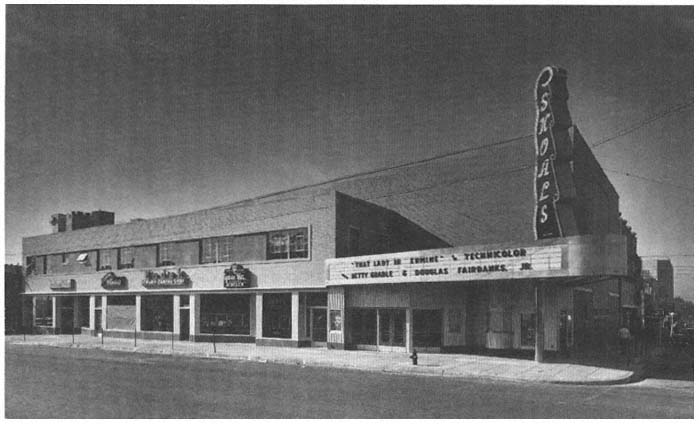
Shoals Theater, Florence, Alabama, 1948
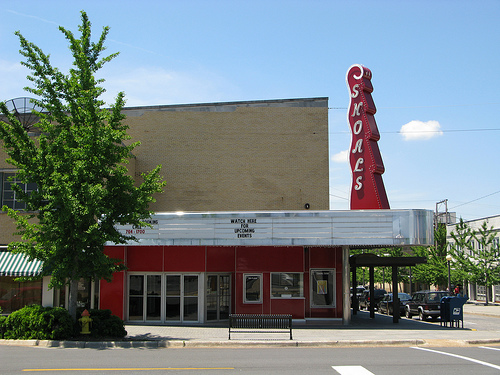
Shoals Theater, Florence, Alabama, 2008
It’s a strange paradox, but about half of my friends and colleagues think that we’re currently approaching the end of cinema as an art form and the end of film criticism as a serious activity, while the other half believe that we’re enjoying some form of exciting resurgence and renaissance in both areas. How can one account for this discrepancy? One clue is that most of the nay-sayers tend to be people around my own age (66) or older whereas most of the optimistic ones are a good deal younger (most of them under 30).
I tend to feel much closer to the younger cinephiles on this issue than I do to the older ones. But I must admit that much of the confusion arises from the fact that the two groups typically don’t mean the same things when they use terms like “cinema,” “film,” “movie,” “film criticism,” and even “available”. Read more
’tis Autumn: The Search For Jackie Paris
From the Chicago Reader (June 5, 2008). — J.R.
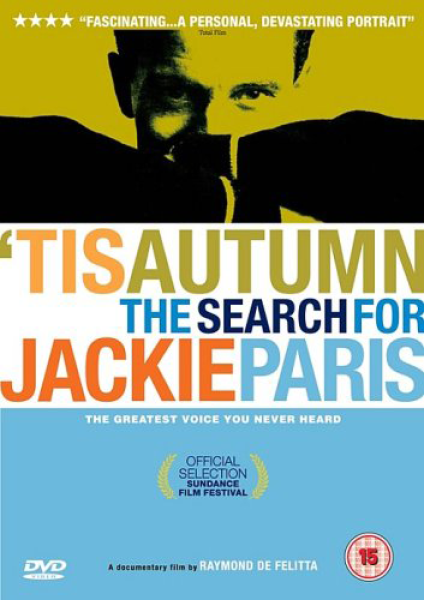
A director and writer of fiction films (The Thing About My Folks, Two Family House) as well as a jazz pianist, Raymond De Felitta tracked down the great, forgotten bebop singer Jackie Paris, befriended him, and in this documentary tries to get to the bottom of why his promising career never clicked, despite tours with Charlie Parker and Lenny Bruce. What emerges is inconclusive and sometimes awkward — especially when Peter Bogdanovich, Frank Whaley, and Nick Tosches get enlisted to recite news stories and reviews — yet also haunting and heartbreaking for what it shows about the scuffling disorder of some jazz careers. When the voice-overs don’t compete with the music, Paris is a spellbinder even at 79 (though I didn’t learn as much as I wanted to about his guitar playing and tap dancing), and his classic singing of Skylark sent shivers up my spine (2006). 100 min. (JR)
Kim Novak as Midwestern Independent
This article was originally published in Stop Smiling no. 27 (“Ode to the Midwest”) in 2006. It’s also reprinted in my collection Goodbye Cinema, Hello Cinephilia. — J.R.
Kim Novak as Midwestern Independent

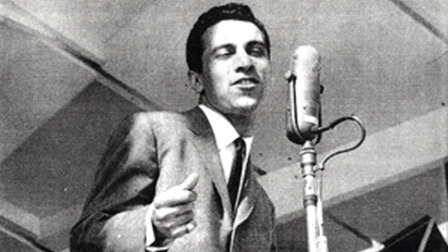
It’s possible that the star we know as Kim Novak was partially the invention of Columbia Pictures —- conceived, as the Canadian critic Richard Lippe puts it, both as a rival/spinoff of Marilyn Monroe and as a replacement for the reigning but at that point aging Rita Hayworth. At least this was the favored cover story of Columbia studio head Harry Cohn, whom Time magazine famously quoted in 1957 as saying, “If you wanna bring me your wife and your aunt, we’ll do the same for them.” It was also the treasured conceit of the American press at the time, which was all too eager to heap scorn on Novak for presuming to act — just as they were already gleefully deriding Monroe for presuming to think. But Monroe, as we know today, was considerably smarter than most or all of the columnists who wrote about her. And Kim Novak — a major star if not a major actress — had something to offer that was a far cry from updated Hayworth or imitation Monroe (even if the latter was precisely what Columbia attempted to do with her in one of her first screen appearances, in the 1954 Judy Holliday vehicle Phffft! Read more
Finding Oneself in the Dark: Costa’s NE CHANGE RIEN
Written for Filmkrant‘s “Slow Criticism”, February 2010 (no. 318). — J.R.
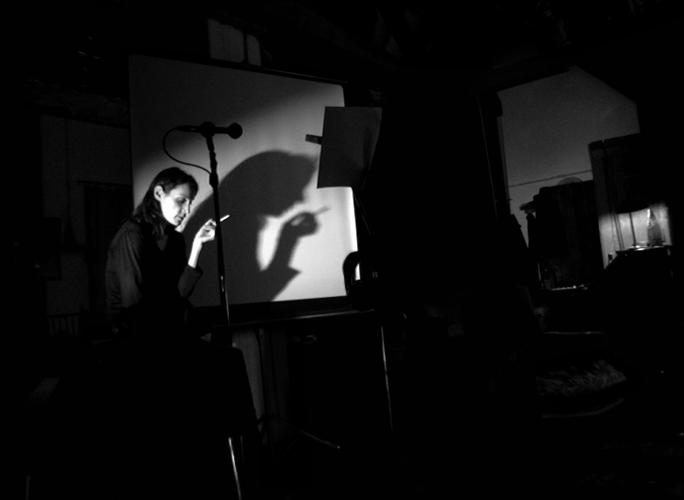
There’s a personal reason why Ne Change Rien comes together for me in a way that few music documentaries do. Eight years ago, I was approached by Rick Schmidlin, the producer of the 1998 re-edit of Touch of Evil (on which I’d served as consultant), about writing or directing — in any case, helping to conceptualize — a documentary about jazz pianist McCoy Tyner. This led to a lengthy conversation with Tyner in Chicago and then a three-page treatment that I prepared with cinematographer John Bailey via phone and email, which concluded, “Any film that’s about listening, as this one will be, will also be about looking — predicated on the philosophy that the way one looks at musicians already helps to determine the way one listens to them.”
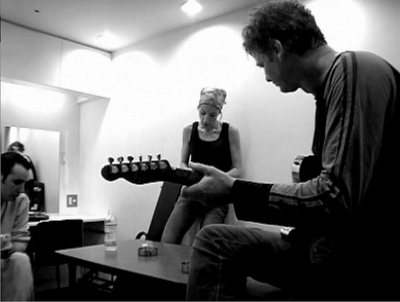
For me one of the ruling ideas was that few jazz films, apart from a handful of the very best, focused enough on the spectacle of jazz musicians listening to one another. And I saw (and heard) the whole thing as a two-way process — the way one listens should dictate the way one looks, as well as vice versa. Read more
Reasons for Kicking and Screaming
This essay about Noah Baumbach’s first feature was commissioned by Criterion for their DVD of Kicking and Screaming, and was written around May 2006. — J.R.
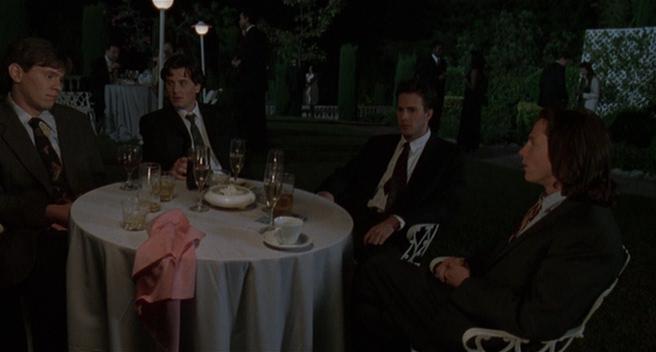
“There’s plenty of wit on the surface,” I wrote in my capsule review of Kicking and Screaming when it was released a little over a decade ago, “but the pain of paralysis comes through loud and clear.” Having voluntarily spent five years as an undergraduate myself, I could and still can find plenty of reasons to identify with the four desperate antiheroes of this brittle comedy, who graduate from college and then proceed to spend the next half year on or around campus, doing as little as possible.
Grover (Josh Hamilton), expecting to live in Brooklyn with his girlfriend, Jane (Olivia d’Abo), is so dumbstruck and angry when she accepts a scholarship to study in Prague that he won’t reply to any of her phone messages, and can only brood over their past in five strategically placed flashbacks, each one heralded by a black-and-white snapshot of her. Otis (Carlos Jacott) finds himself incapable of flying to grad school in Milwaukee, only one time zone away, and reverts to living with his mother. Max (Chris Eigeman), who’d rather label broken glass as such on the floor than sweep it up, finds nothing better to do than chide Otis, do crossword puzzles, and have sex with Miami (Parker Posey), the girlfriend of Skippy (Jason Wiles). Read more